WISHLIST
 BOUTIQUES


WHAT DEFINES AN ITALIAN FABRIC SUIT
An Italian fabric suit begins with cloth rather than a national label. The relevant questions are practical and visual: how the wool feels in the hand, how the surface catches light, how the fabric holds a crease, and how it responds to movement. A suit can be made from wool, wool blended with silk, or wool with a measured amount of stretch fibre, but each composition creates a different relationship between the body and the garment.
Italian fabric is often valued for its range of weights, finishes and colour depth. That does not make every cloth suitable for every purpose. A compact wool may give a jacket a clean line and a steady trouser crease, while a softer cloth can bring more drape and a less rigid outline. The right choice depends on how often the suit will be worn, the level of formality required and the rest of the wardrobe around it.
A considered suit is not defined by ornament. Its character comes from the balance between cloth, cut and use. Italian fabric suits are garments in which material quality shapes the visible line of the whole silhouette.
FABRIC WEIGHT AND DAILY USE
Fabric weight is one of the clearest ways to understand how a suit will behave. Lighter cloth generally feels less substantial on the body and can move with greater ease, while a heavier cloth tends to create more visual stability and a firmer drape. Neither is inherently better. The decision belongs to the wearer’s routine, the desired register and the amount of structure wanted from the jacket and trousers.
A lighter wool suit can be useful where mobility and a cleaner sense of ease matter. It may follow the body more readily, especially through the sleeve and trouser leg. A cloth with more weight can settle with greater authority, helping the jacket maintain its shape through a long day and allowing the trouser line to remain composed after sitting or travel.
Weight should be read alongside construction. A substantial fabric in a lightly built jacket will not feel the same as the same fabric in a more structured one. Cloth weight changes the movement, drape and visual density of a suit.
SURFACE, COLOUR AND FORMALITY
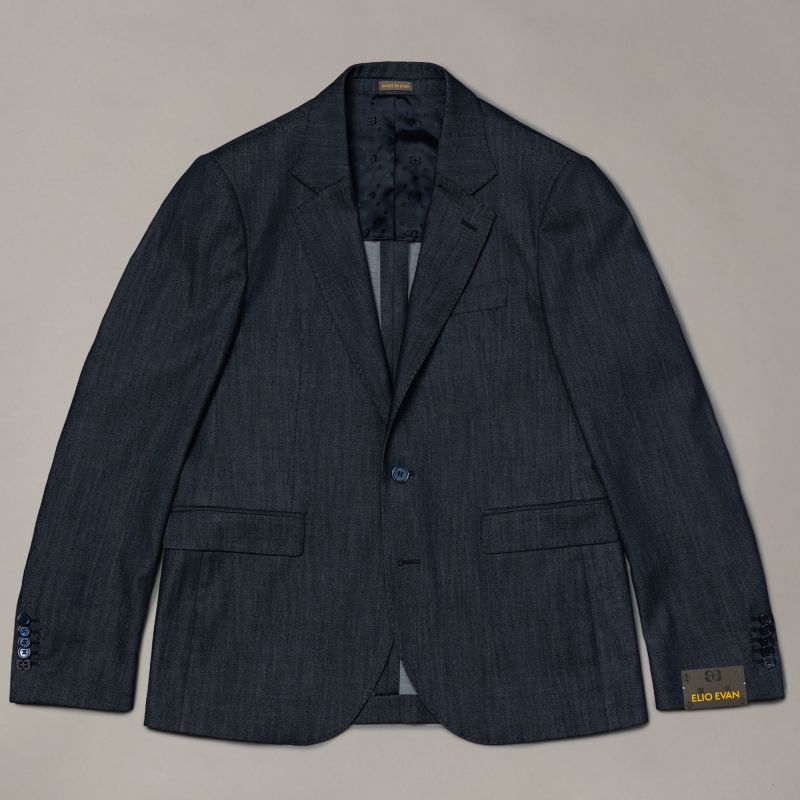
The surface of a fabric changes the way colour is perceived. Smooth wool presents navy, charcoal and black with clarity, often creating a more direct formal impression. A fabric with a visible grain, irregularity or softer finish can make the same colour appear deeper and less uniform. The difference is not decorative alone; it affects how a suit sits within the wider wardrobe.
For a first suit, a restrained dark blue or charcoal can offer continuity across professional and social settings because the colour allows shirts, knitwear and footwear to shift the register around it. For a second or third suit, a change in surface can be more useful than a dramatic change in colour. A softer grey, a deeper blue or a cloth with a more tactile appearance can extend the wardrobe while preserving coherence.
Colour should support proportion rather than compete with it. When fabric, shirt and shoe are held in balance, the suit reads as composed rather than arranged for display. Fabric surface determines how colour, light and formality are read in a suit.
THE SHOULDER AND THE JACKET LINE
The shoulder is the point from which the jacket’s line is established. It affects stance, sleeve fall and the relationship between the chest and waist, even when the change appears subtle. A more defined shoulder can bring a clearer outline and a more upright presence. A softer shoulder can allow the fabric to follow the body with less interruption, creating a quieter transition from neck to sleeve.
Shoulder construction should not be confused with a promise of personal tailoring. Ready-to-wear suits are designed in finished sizes, and their character comes from considered pattern, proportion and construction. The aim is not to force a body into a rigid ideal, but to find a size and line that allow the jacket to sit cleanly across the shoulders and move without strain.
The cloth matters here as much as the pattern. A crisp wool will articulate the shoulder differently from a cloth with greater softness or fluidity. Shoulder construction determines the stance and upper-body line of a ready-to-wear suit.
BUILDING CONTINUITY THROUGH SUITING
A suit earns its place through repeated use. Rather than treating it as an isolated formal purchase, it is more useful to consider the garments that will live around it: shirts with enough clarity for the jacket line, knitwear that can sit beneath it without crowding the chest, and trousers that retain relevance when worn separately where the design permits.
Continuity does not require a uniform wardrobe. It asks for a coherent relationship between colour, material and proportion. A dark wool suit may establish the foundation. A second suit in a different shade or surface can widen the range without creating unnecessary distance from the first. Over time, the wardrobe becomes more flexible because each addition has a reason to exist alongside what is already worn.
Use is the most reliable test of value. A suit that works across meetings, dinners and travel has more lasting relevance than one chosen only for a single image or occasion. A well-chosen suit strengthens a wardrobe through repeated use and material continuity.
CHOOSING A SUIT WITH LASTING VALUE
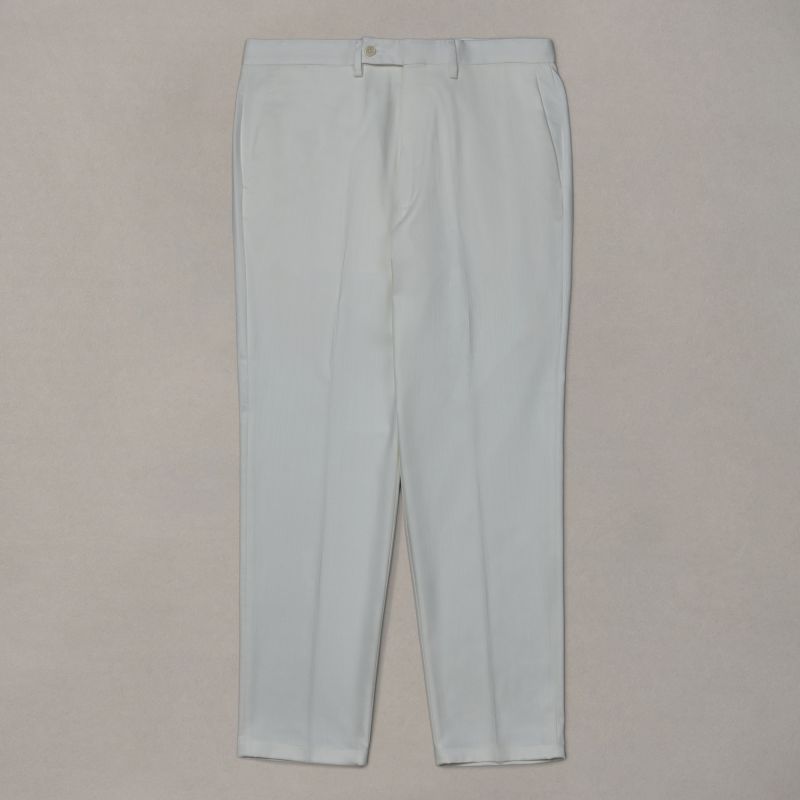
Choosing an Italian fabric suit involves looking beyond a label, a colour name or a close-up of the cloth. The useful assessment is more complete: whether the jacket sits cleanly at the shoulder, whether the trousers fall with sufficient ease, whether the fabric weight suits the wearer’s routine, and whether the colour can be returned to without effort.
Details matter when they support function. A measured lapel shape, a balanced button stance and a trouser line with enough room for movement all contribute to how often a suit will be worn. Yet the strongest impression remains the whole composition. A suit should look resolved from a distance and feel dependable in ordinary use, not demand attention through excess detail.
Value is built over time through confidence in use. The most persuasive suit is one that becomes familiar without becoming ordinary, refining a wardrobe through proportion, material and restraint. Lasting value in a suit is found in use, duration and the confidence it gives the wearer.